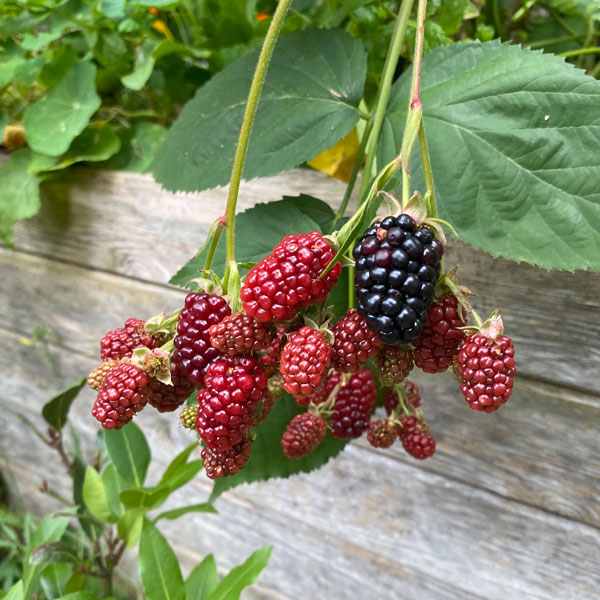
Like many people, we gardeners go kicking and screaming into fall, reluctant to let go of the long days of summer and grapple with the switch to shorter, chilly days filled with back-to-school obligations and earlier sunsets.
I don’t know if it’s just me, my stage of life, the transition of the season or the crazy state of the world these days, but I’m tired. And yet, that fatigue has led me to make some positive changes in my approach to gardening.
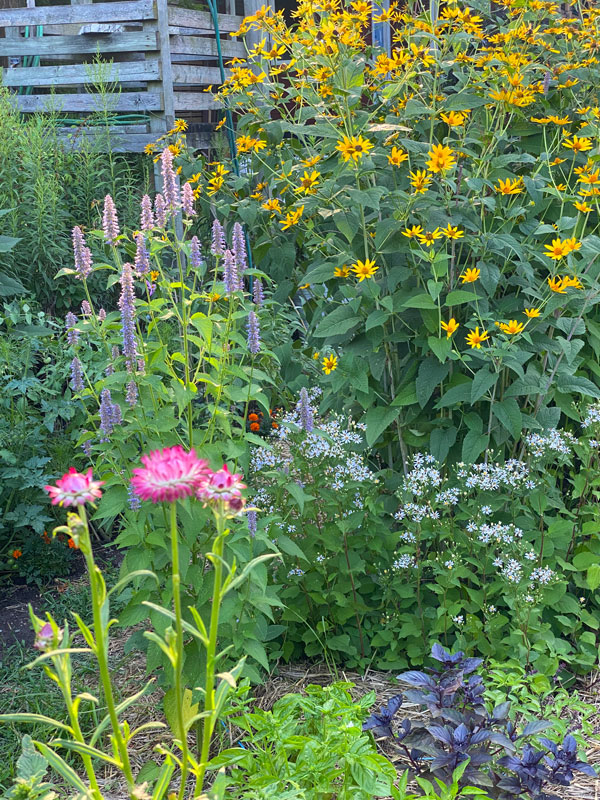
Finally, I am allowing myself to be imperfect. So what if I let the “weeds” grow? Turning a blind eye to some opportunistic plants has resulted in an unexpected abundance of wild arugula, strawberries, and mint that not only feed my family but also feed the bees, butterflies and other beneficial insects. My flagging energy suddenly revives when I scan my messy garden and see so many pollinators gathering and eating and storing, just like I am. And I relax a little, knowing that everything is in fact as it should be.
Taking a “let them” or an “easy-is-best” approach to tending a garden may make for a less tidy space but it can be higher yielding and a whole lot easier, leaving me more time to do the things I really love to do – harvest, prep, eat, and share with family, neighbours, and those in need.
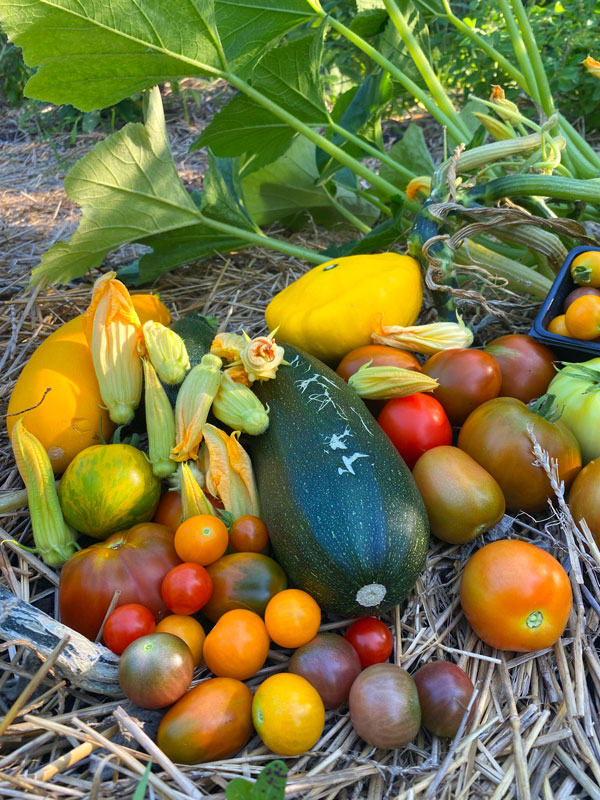
I have been feeling a little guilty about not posting more in my social media gardening circles, and for not writing an August Bulletin. I have so many photos and videos of grand harvests and garden adventures that I normally share, but recently, I made a life-changing discovery.
I enjoy my gardening time so much more when I’m not thinking about expressing my every thought to the world. I’ve finally come to see the value in not multi-tasking, not trying to squeeze every advantage from every precious moment. Doing one thing at a time helps me fully immerse myself, to be present and engaged with only the task at hand . The happy result is a renewed awareness of a wonderful and energizing state of “flow” that enables me to take on fall gardening feeling enthusiastic and excited instead of overwhelmed.
And it’s easy to get overwhelmed at this time of year, with so much produce to harvest and then figure out what to do with it all, let alone all the other to-do’s my garden asks of me. Again, I have adopted the easy-is-best approach.
We all want to capture the sweet taste of summer to get us through a dark and frigid winter, but canning and saucing bushels of tomatoes is only one way to achieve this. So rather than canning, I freeze tomatoes as they ripen, skins and all. It only takes a few minutes to rinse, package, label, and pop them in the freezer.
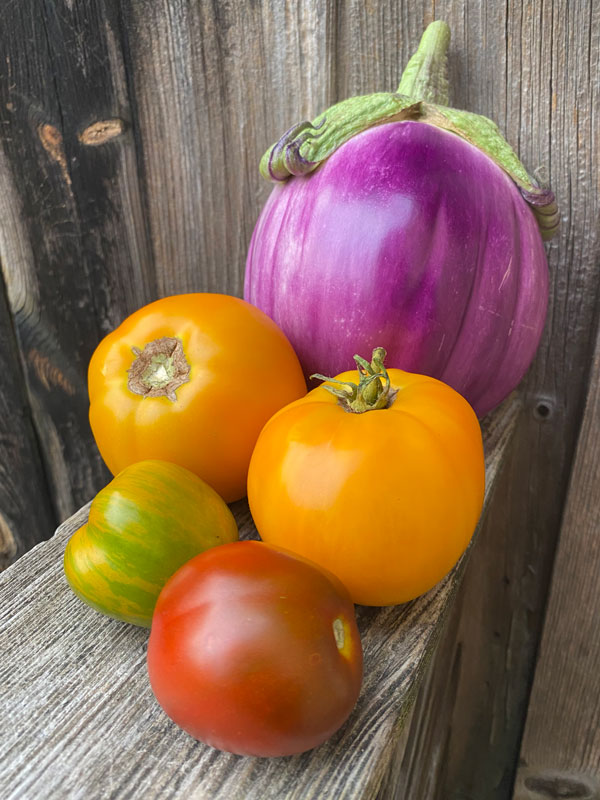
When it comes time to use them, I defrost and cook what I need, and use a food mill to remove the skins. I also love to make a large batch of very freezable ratatouille that includes tomatoes, peppers, eggplants, onions and herbs from the garden. Devour some for autumn dinners and freeze the rest in handy, pre-portioned batches for instant meals through the winter.
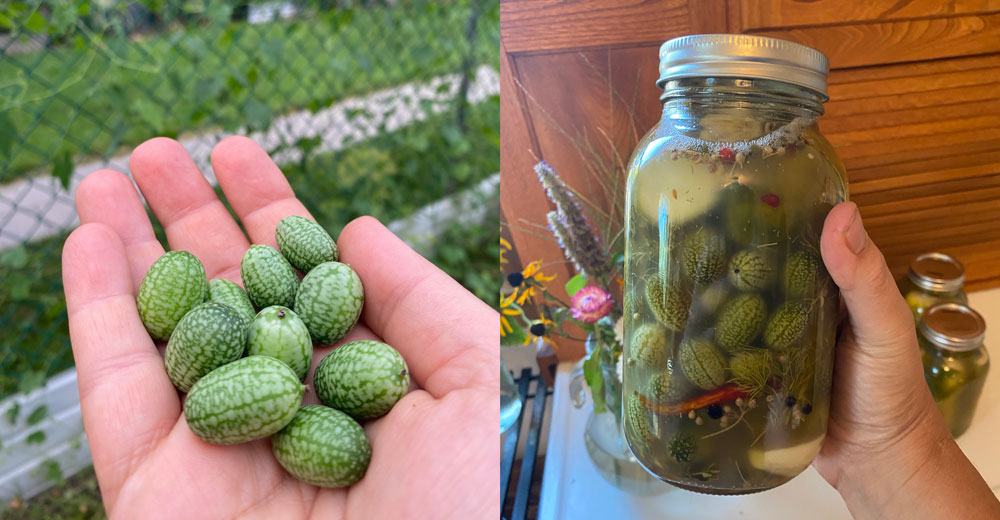
Pickling cucumbers and other veggies used be a full-day endeavour because I did them in huge batches. But I learned that it’s easy to do a few jars at a time which speeds up the process significantly. I prefer the lacto-fermentation process to “quick pickle” recipes because there is no sugar required.
I have come to regard perennial herbs as the jewels of the garden. Their value extends well beyond their beauty. Not only are many of them fabulous ground cover that protects and nourishes the soil (and smell heavenly when I walk through them), but their flowers provide nectar for pollinators, and their exquisite scents and flavours elevate the most basic dish to gourmet status. Plants like oregano, thyme, sage and rosemary are not fussy about the way they are harvested so you can gather great handfuls in no time. The same is true for a wide variety of basils. One of my favourites is Tulsi, a.k.a. Holy Basil, which grows in abundance and makes a refreshing and calming hot or cold tea. Hang herbs to dry in bunches, use fresh or freeze them blended with olive oil in ice cube trays. You’ll have more than enough herbs to get you through to next season. Same for mint, tarragon, lemon balm and so many others! Little batches of dried culinary herbs in pretty, labeled mason jars make great stocking stuffers too!
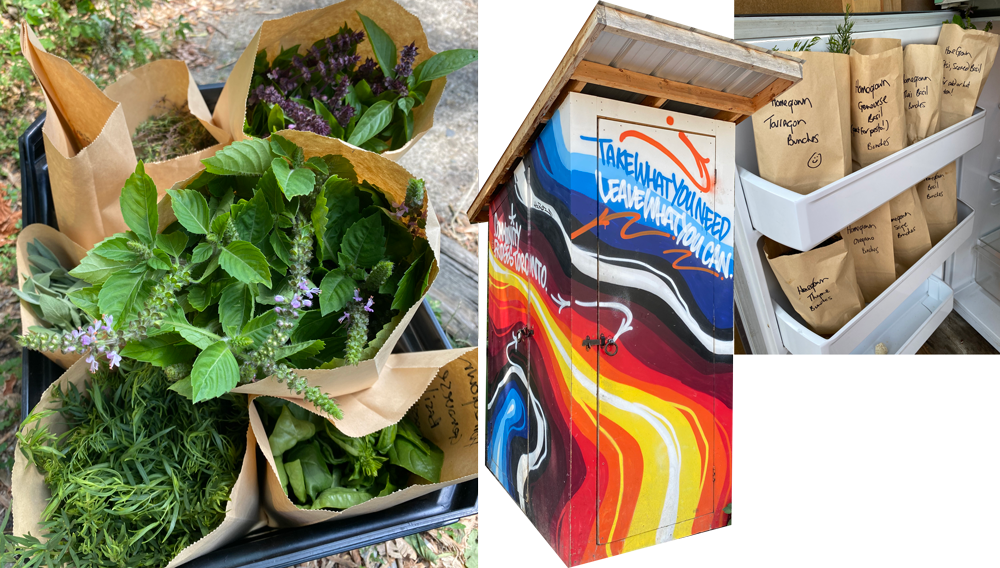
Kale and Collard Greens are easy to freeze as whole, flat, leaves that don’t take up much room in the freezer. They won’t make great kale chips when defrosted but are the perfect nutrition and flavour addition to soups and stews.
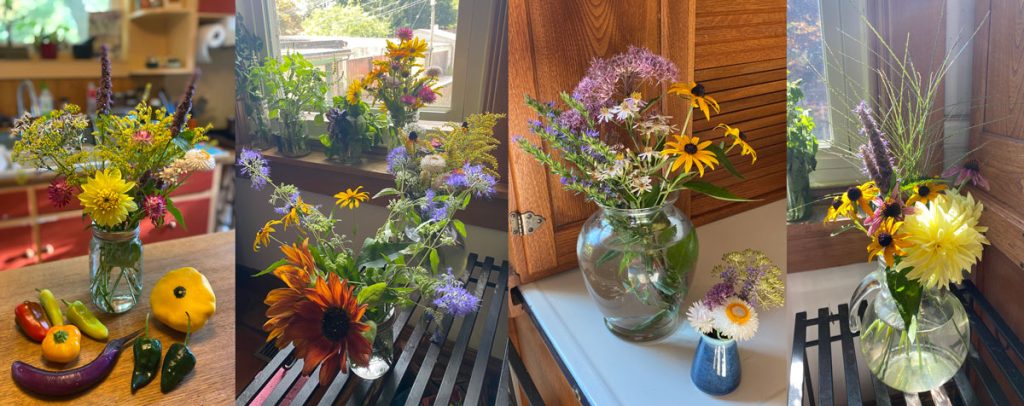
For many seasons I have focused on growing edible plants, but over the past few years my attention has been increasingly drawn to flowers, even the ones that aren’t edible. Their ecological role in nature is well known and that was my original motivation for adding them to our gardens. We have seen real proof that our vegetable yields improve significantly when they are companion planted with native flowers that attract pollinators. Today, some of our gardens are mostly flowers with only a few edible plants, and that inevitably leads to the crafting of flower bouquets. I am constantly amazed by how simple and fulfilling it is to create a gorgeous bouquet out of a seemingly random collection of flowers, herbs, grasses and greens from the garden. No need for extravagant vases, a humble mason jar is an inexpensive vessel that makes a beautiful gift when filled with flowers. My windowsills, tables, shelves and countertops are bursting with gorgeous arrangements that seem almost to have created themselves. Mother Nature makes it easy. And it is from her that I take my inspiration.
Yes, there is a lot for gardeners to do at this time of year. In only a few short weeks we will be taking down tomato plants and feeding the soil for the planting of garlic and flower bulbs, and then putting the gardens to bed for the winter. But we can make the whole process easier and a lot more enjoyable when we let go of perfection, stay in the moment, and let our gardens be what they want to be.
Leave a Reply