For many, a bubbling hot lasagna is go-to comfort food. Layers of beautiful broad pasta, warm rich tomato sauce, gooey stretchy cheese, served fresh out of the oven. Mouth-watering! Especially in fall when warm foods check all the comfort-food boxes.
Now, did you know that lasagna is also fantastic for your garden? All that’s needed is to swap out the pasta, sauce, and cheese for cardboard, fresh, rich soil, and organic straw. Not so tasty for us but delicious for worms and microbes in the soil.
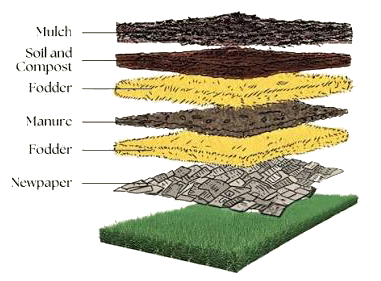
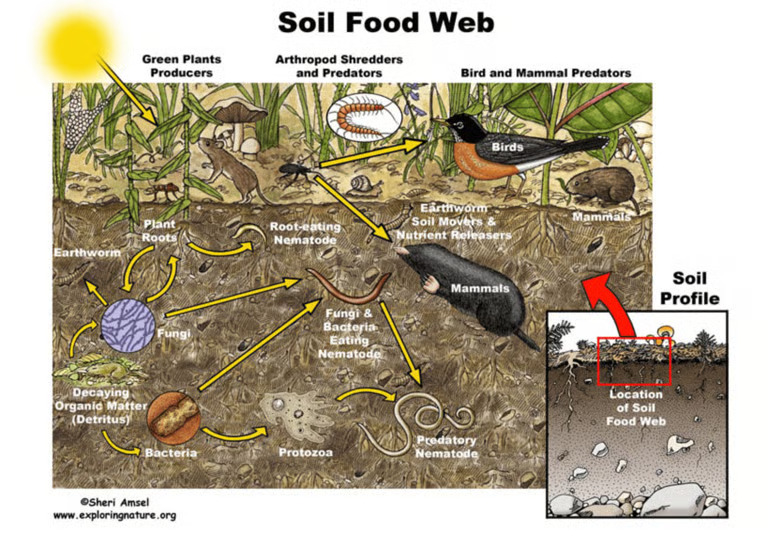
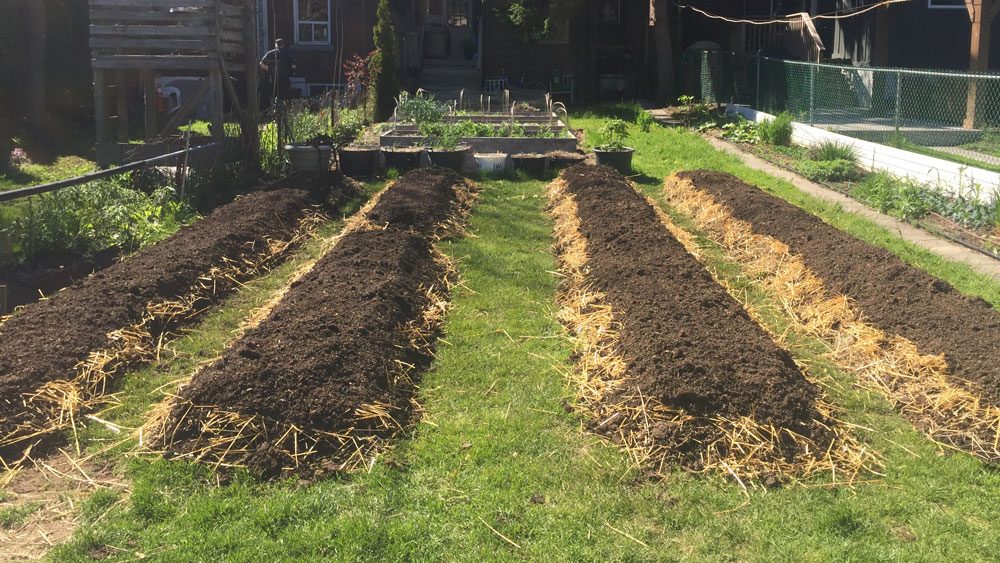
Basically, layers of cardboard, soil, and straw are applied directly to the ground. In as little as two months, the microbiology in the soil, from big, fast-eating earthworms to invisible micro-organisms, will have worked their way deep into the above ground layers, leaving in their wake beautifully blended, nutrient-rich, and naturally produced soil.
If you are dealing with unproductive gardens due to clay-heavy soil (welcome to Toronto’s west end), sandy soil, (welcome to Toronto’s east end), hydrophobic soil (does not absorb water), or nutritionally “dead” soil, then this simple recipe is made-to-order for you.
Lasagna gardening is also a fantastic way to establish a new planting area. By layering the right ingredients in the right order, you can avoid invasive, expensive and wasteful excavations, removals, and disposals.
The beauty of this regenerative process has two main advantages, the first being its simplicity. We work with what is already there, accepting the conditions as we find them, and building through addition instead of subtraction. There is nominal preparation required. No grading, no removal of grass, minimal weeding, no expensive and wasteful excavations that need disposing of… Simple.
The second advantage is soil health, which is off the charts. Lab tests would be interesting, but the proof is in the gardens that flourish with strong stems, robust leaves, and bursting with life.
The Recipe
Lasagna gardening is a relatively new approach to inground gardens, first introduced in the late 1990’s by inn keeper and gardener Patricia Lanza who shared her newfound knowledge in her book Lasagna Gardening: A New Layering System for Bountiful Gardens.
Ingredients
- Cardboard – new and unused is best, but if you are using previously used, make sure to remove plastic tape, staples and any other things that won’t decompose quickly. If you need a lot, rolls of corrugated cardboard can be purchased from many different moving supply stores.
- Triple mix soil, best if not previously used to minimize weed seed and other potential issues.
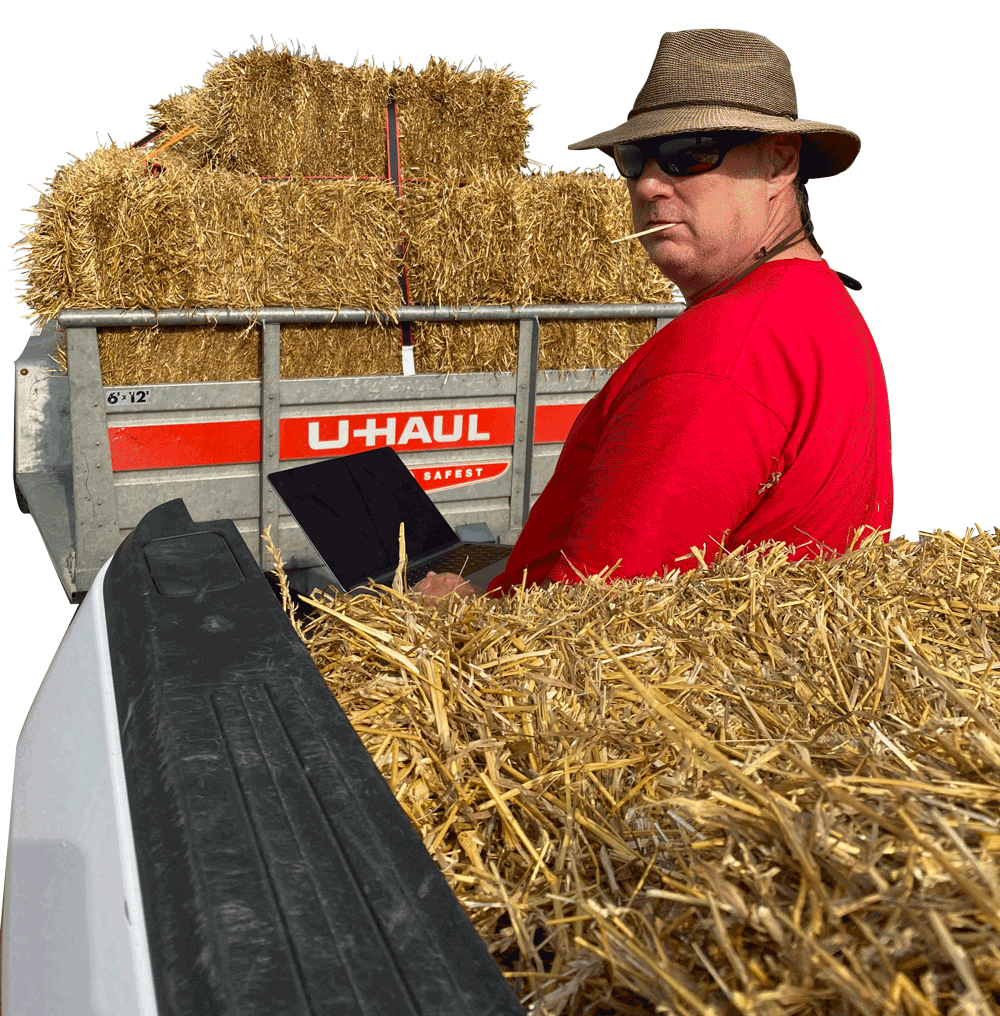
- Certified organic straw, organic to avoid introducing chemically treated elements into your new garden
Instructions
Step One Remove any large, unwanted plant material by the roots. Cut smaller weeds down to the ground. No need to remove the roots of smaller plants as they will decompose in the soil, smothered by the lasagna layers. Remove any rocks and other unwanted items from the area. That’s it. You’ve prepped the space.
Step Two Place a single layer of cardboard directly overtop the grass or soil of garden area. Trim the edges to match the shape you want established. Give the cardboard a good, long soak with water.
Step Three Add two to three inches of fresh triple mix soil. Soak with water.
Step Four Add a six-inch layer of straw. Soak with water.
Step Five Repeat steps Three and Four.
Remember, microbes, worms and decomposers need everything we need to survive – oxygen, nutrition, water and love! So for the next couple of months, water deeply and consistently so the whole entire casserole stays damp, which hastens decomposition.
Autumn is the perfect times to get a lasagna garden established, as the fall weather usually brings a lot of rain, reducing the amount of watering you will need to do. Additionally, with your garden already established, you can get planting extra early next spring.
How It Works
The first layer, cardboard, has a very specific job: to attract worms and other beneficial soil-bound insects to the surface. Within a short time, the cardboard will have been broken down, and the living elements move into the first soil layer. They go through that to discover a beautiful thick layer of damp, nutrient rich straw. “Yummy yum”, says the soil biology! And on it goes.
When worms and insects eat, which they do pretty much constantly, they then need to rid themselves of the digested results, as nature would have it. Their output is referred to as frass, or castings, or more commonly, poop. Only it’s not the kind of poop we’re most accustomed to (no more detail required!) This poop is special, perhaps the single most nutritionally dense and beneficial element that goes towards building great soil. The process of eating and excreting is a never-ending cycle within the soil when the conditions are perfect.
The goal of lasagna gardening is to create those perfect conditions, to hasten production in the most unobtrusive way possible. In as little as six weeks, voila – a thick, rich, incredibly healthy layer of ready-to-plant soil.
BUFCO Case Studies
Upper Canada College’s “Missing Tooth”
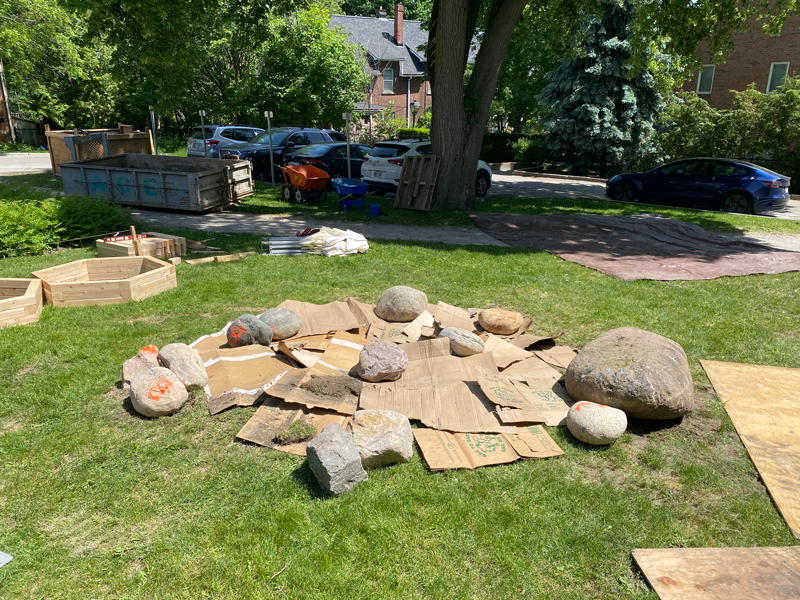
We are extremely fortunate to have a wonderful longstanding relationship with Upper Canada College in mid-town Toronto. We started with UCC 10 years ago, running their prep school gardening program, which continues today. Most recently we installed a new garden for the Upper School (high schoolers) that included a variety of raised beds, and the solving of a significant challenge. The chosen site had a huge tree that had recently been felled, and even though the stump had been ground out, a beautiful and massive network of exposed roots were left behind making the ground uneven and unsuitable for installing raised beds. We discussed excavation of the roots, but it would have been a huge and destructive undertaking and would destroy the vast, long established community of organisms living below the surface in the roots and soil.
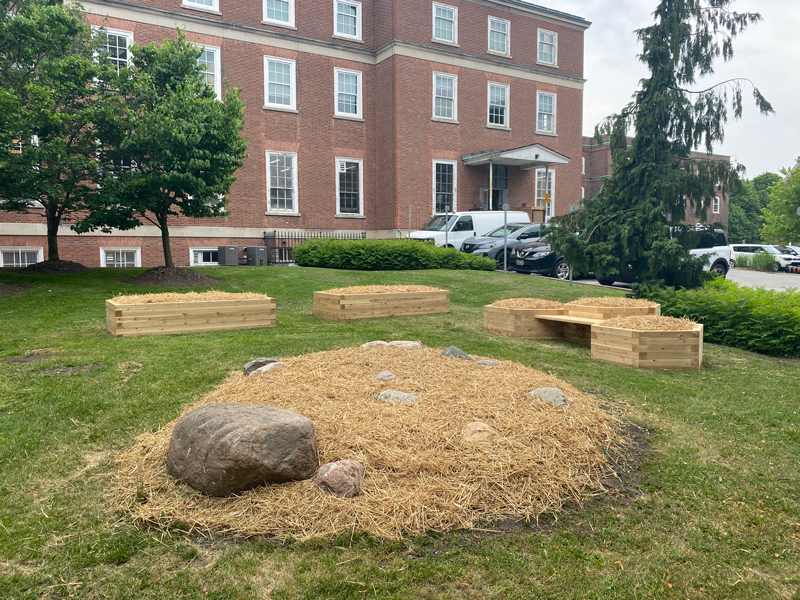
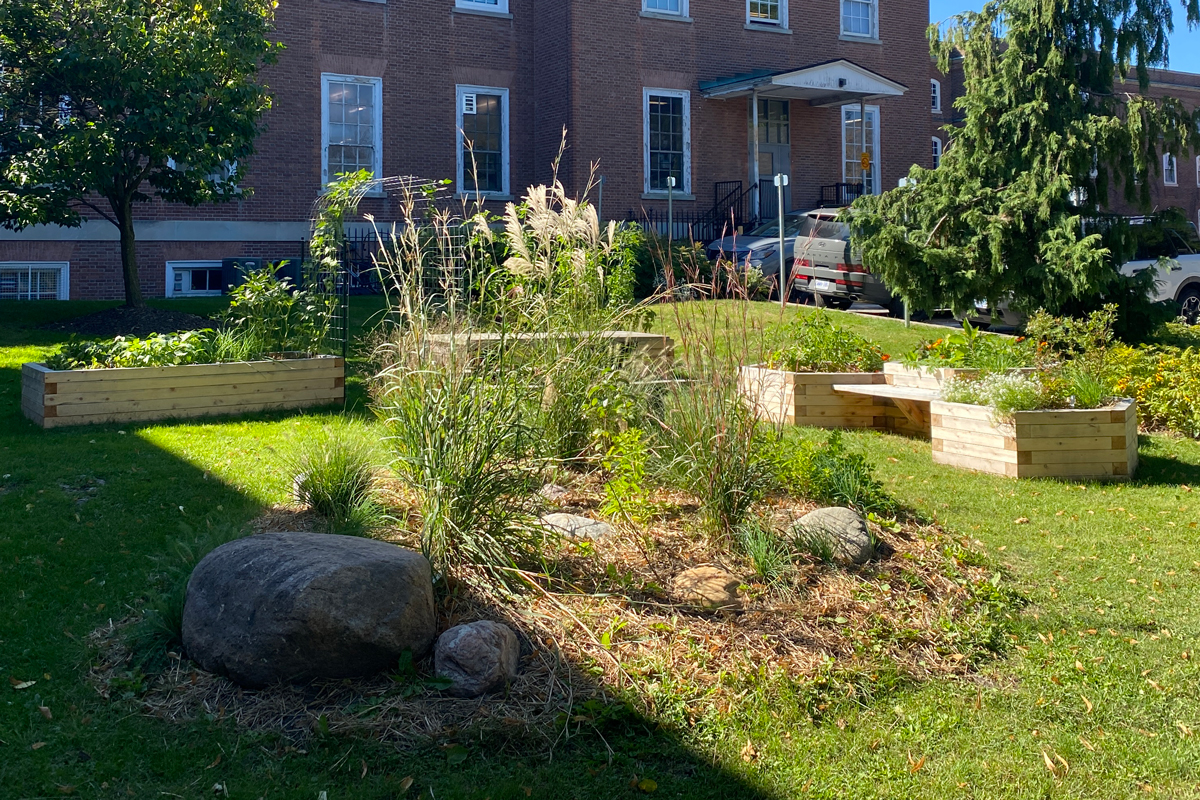
Lasagna garden to the rescue! Using only four hours of our three days of work there, we had lasagna’d up the space. A half-dozen thoughtfully placed pieces of large granite rocks nestled here and there, the raised beds installed on higher, more level ground and the picture was completed.
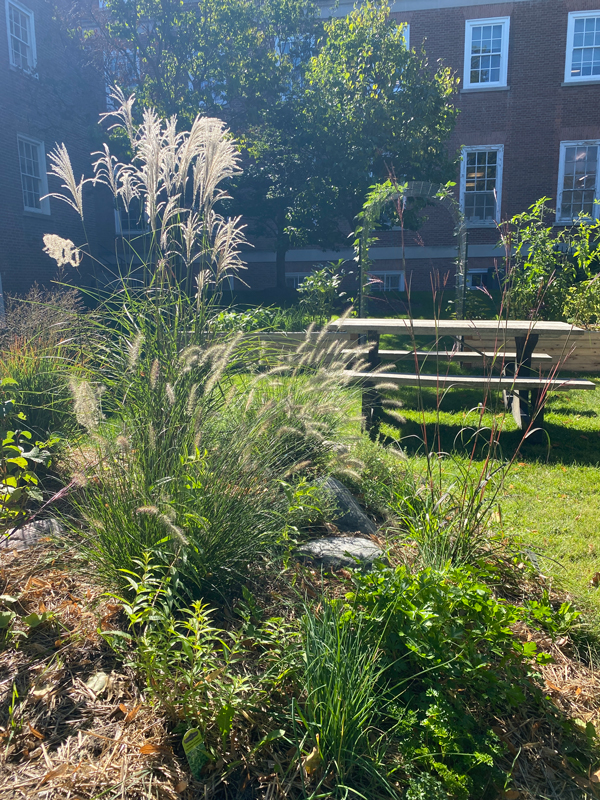
After letting the lasagna layers percolate for only four weeks, we decided to plant it a bit earlier than we normally would.
Here are the gorgeous results of a thriving pollinator garden:
Sonia and Patrick’s Landlocked Backyard
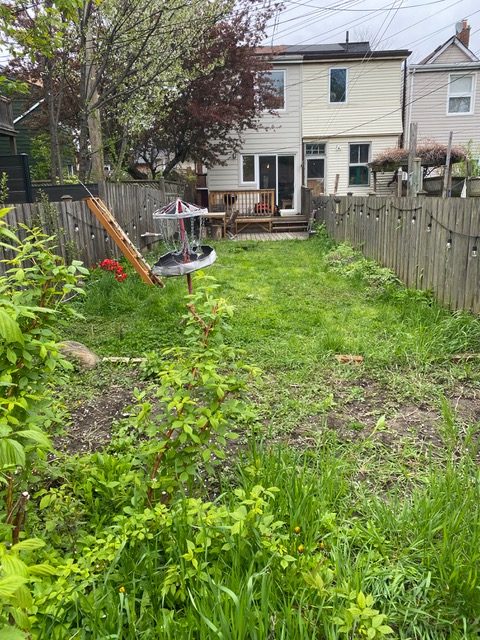
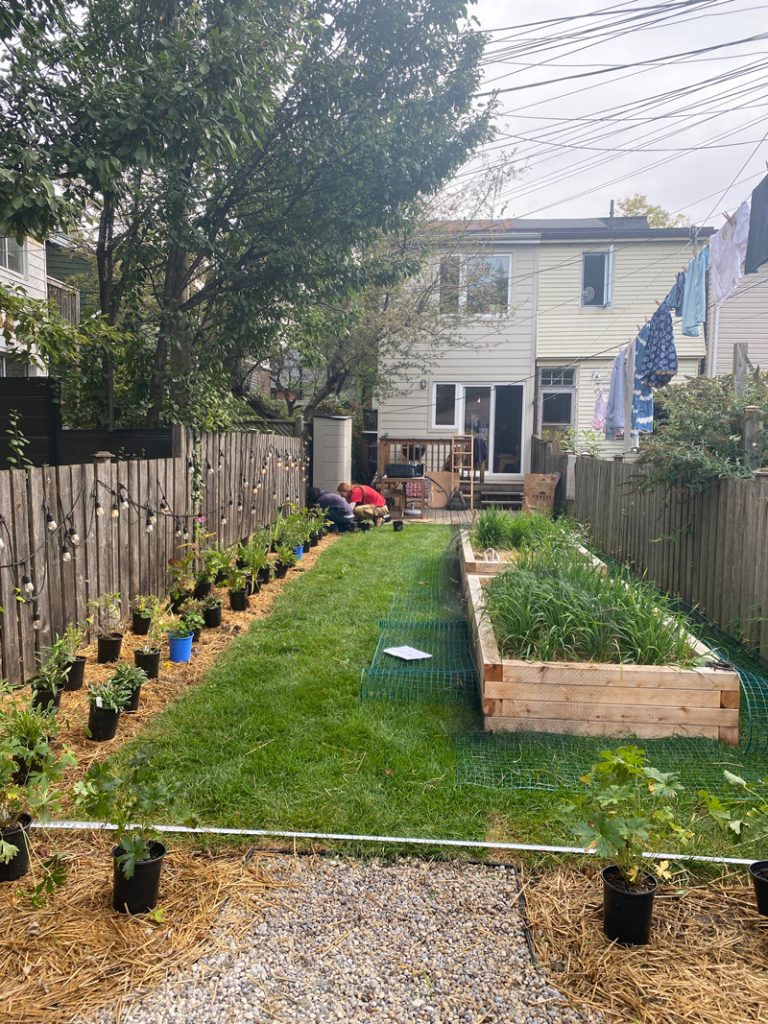
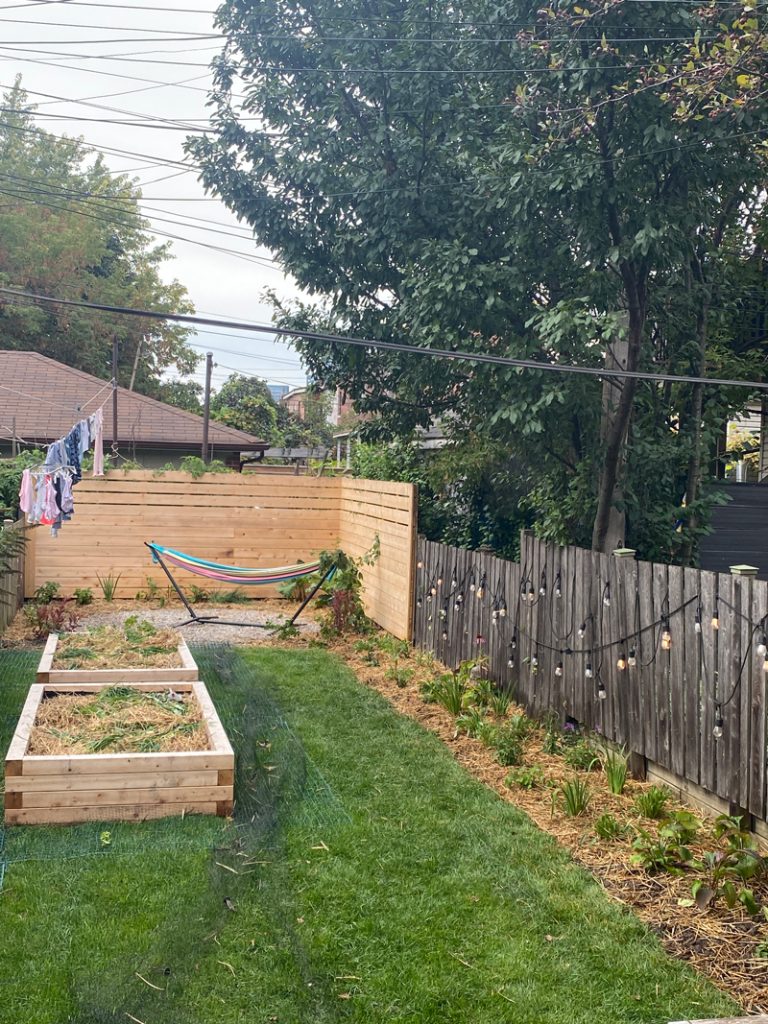
Sonia and Patrick live in a quaint little home in Toronto’s west end where houses date back to the early 20th century. Urban planning then wasn’t what it is now, and our client’s backyard was completely landlocked. They wanted a complete garden transformation in a good-sized backyard. The goal was to replace an undulating, weed infested lawn with edible and pollinator gardens that would increase biodiversity and provide food and forage for their young family. The problem was there was no way in or out to the backyard except through their recently renovated home. The idea of removing 10 cubic yards of weedy, old sod and soil and bringing in the same amount of fresh soil through the house was unappealing and expensive. Instead, we offered, and they chose the lasagna garden method.
We protected the floors and walls of the main floor with cardboard (good for more than just lasagna gardens!) and rigged up dollies with shock-absorbing pool noodles for further protection. We were able to move all the lasagna garden materials to the backyard without leaving a scratch. And because there were no removals required, the entire excavation and disposal process was eliminated, saving time, money, and lowering the amount of material we had to move through the house by a very significant 50% or more.
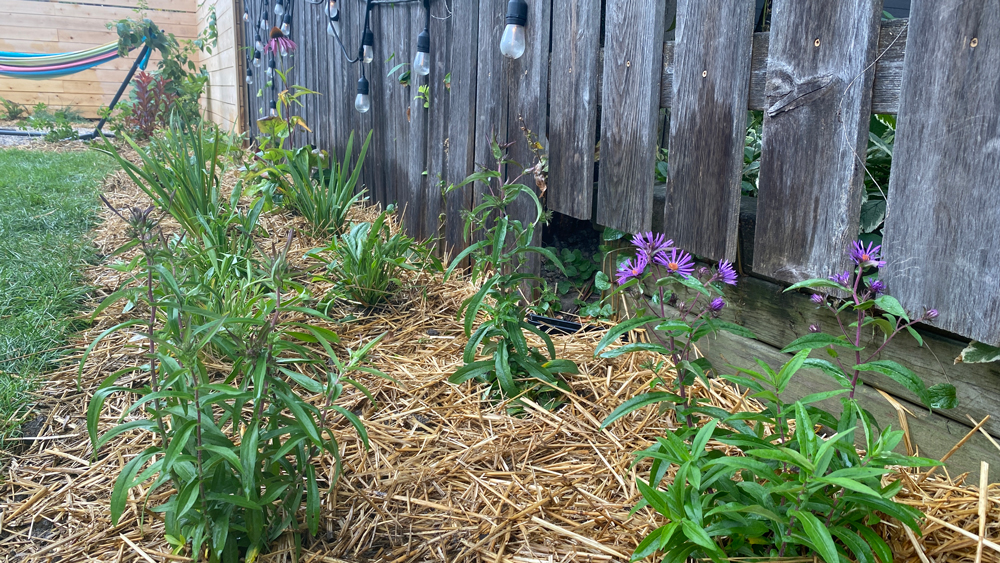
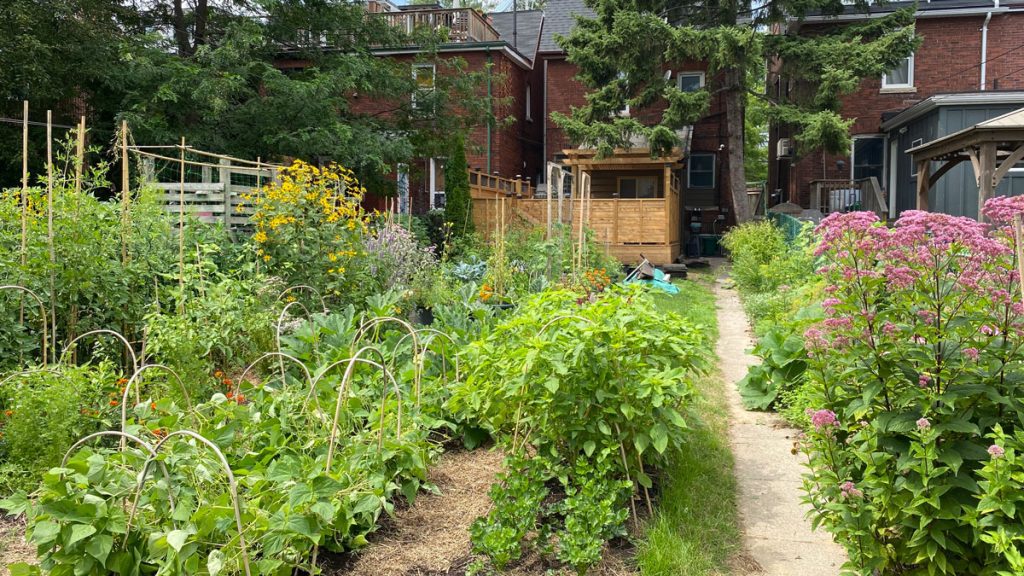
That was about two months ago. And because of regular watering over these last eight weeks, we were able to plant a garden that is now flourishing. Plus, weeds that were covered up by the lasagna gardens have not reappeared. Mission accomplished!
Final Serving
A lasagna garden won’t replace raised garden beds in terms of speed of readiness or for ease of use. A raised bed can be installed in the morning and planted the same afternoon. And it brings the soil surface up to the gardener eliminating the need to garden from your hands and knees. Nor is the use of straw as perfectly tidy as a more traditional or formal gardens, so it may not suit everyone’s aesthetic. Buth there are many of us who love the soft, golden hue of straw, it’s warm smell, the hint of farmland, and the knowledge that it brings life well beyond its own life as grass.
Lasagna gardens are not for immediate results. They need time for Mother Nature’s soil-bound workers to turn the layers into a well-blended concoction of plant-ready energy. It may not be planting-ready for some months, or even until the following year, so Lasagna gardens do take patience.
Lasagna gardening is not for everyone in every situation but it’s an excellent, low impact alternative to bring renewed and vibrant life to your gardens.
Leave a Reply